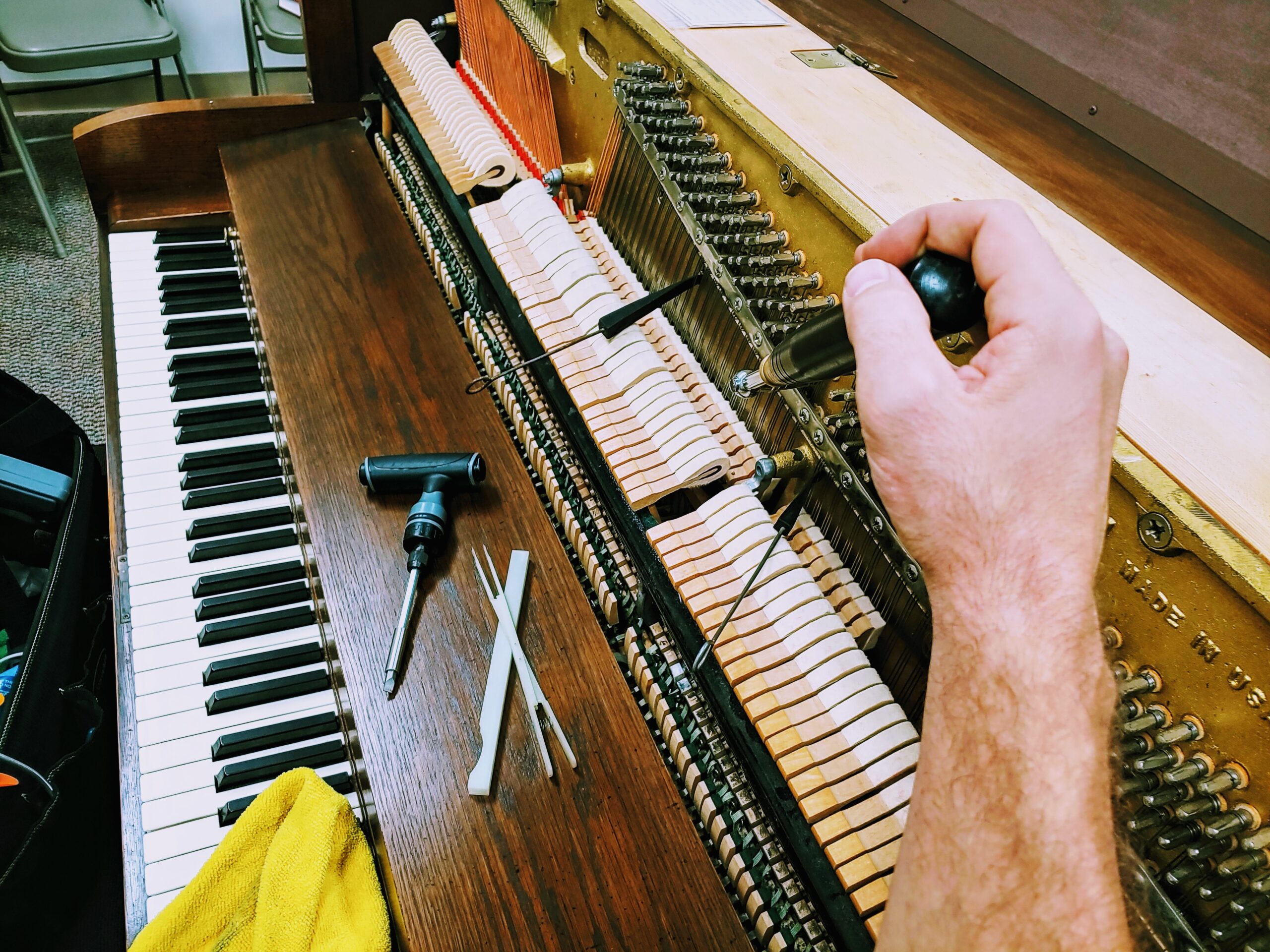
A piano is a living, breathing instrument—one that quietly responds to every change in its environment. While most people think of tuning as a matter of tightening strings or “fixing” a piano that sounds off, the truth runs deeper: tuning is a form of maintenance that keeps your piano stable, healthy, and musical over time.
The Role of Tension and the Soundboard
Each piano string holds an astonishing amount of tension—usually between 150 and 200 pounds. Across the entire instrument, that adds up to nearly 20 tons of pressure working in delicate balance with the wooden soundboard beneath.
The soundboard acts as the amplifier of the piano’s tone, but it also plays a major role in tuning stability. Because it’s made of wood, it naturally expands and contracts with humidity. As humidity rises, the wood absorbs moisture and swells, increasing the crown (the slight arch) of the soundboard. This pushes the bridge upward and increases string tension—making the piano sound sharp. When the air dries out, the opposite happens: the soundboard flattens, tension drops, and the piano sounds flat.
[Diagram Placeholder #1: Soundboard Expansion and Contraction – illustrating how rising humidity pushes the bridge upward and increases string tension]
Humidity and Seasonal Changes
Here in Central Texas, our pianos experience wide swings in humidity from season to season. In the summer, higher humidity makes pianos tend to go sharp, while winter heating dries the air and causes them to go flat. Even within the same day, the effects of air conditioning or central heat can subtly change the piano’s moisture content, flexing the soundboard and shifting the balance of string tension.
Over the years, these cycles also have long-term effects. The pinblock (which grips each tuning pin) can develop compression-set—a slow loss of elasticity in the wood that reduces the torque holding the pins in place. Likewise, the soundboard itself can experience compression-set, gradually reducing its crown and its ability to transmit the full spectrum of tone that the strings produce.
Regular maintenance helps minimize these aging effects and keeps both the tuning and tone more stable.
[Diagram Placeholder #2: Graph showing typical indoor humidity changes over the seasons and their effect on pitch]
How Often Should a Piano Be Tuned?
For most pianos, twice a year is ideal. This schedule keeps the instrument aligned with seasonal humidity cycles and prevents large swings in tension that can strain the structure.
- Home pianos: Every 6 months (often once in spring and once in fall)
- University or church pianos: 3–6 times per year, depending on usage and climate control
- New pianos: Every 3–4 months during the first year, as new strings and soundboards settle in
If it’s been more than a year since your last tuning, your piano will almost certainly need more than just a fine-tuning—it may require a pitch raise to bring it back to standard tension before fine adjustments can hold.
Managing the Environment
Keeping your home’s humidity stable is one of the most effective ways to protect your piano and reduce the need for frequent tunings. Use a room humidifier in winter, avoid placing your piano near heating vents or exterior doors, and consider installing an internal humidity-control system designed specifically for pianos.
[Link Placeholder: Read my post about the Piano LifeSaver System →]
Maintaining a steady humidity level (around 40–50% relative humidity) not only helps the piano stay in tune but also slows the gradual aging of its wooden components. A stable environment preserves both the mechanical integrity and the tonal richness of your instrument.
The Bottom Line
Regular tuning isn’t just about making your piano sound good today—it’s about keeping it healthy and responsive for years to come. Think of it as the musical equivalent of a dental cleaning or an oil change: small, routine care that prevents expensive repairs later.
If you’re unsure when your piano was last serviced or would like to schedule a seasonal tuning, you can [schedule an appointment here → www.allthingskeyboard.com/schedule].
Comments are closed